Why Reputation Management Matters More Than Ever?
In today's digital-first world, your reputation is often your first impression. Before a patient schedules an appointment or a customer visits your business, they are likely researching you online. A few Google reviews, social media comments, or search results can significantly influence whether someone chooses your business—or your competitor's.
For doctors, healthcare practices, and small business owners, reputation management is no longer optional. It is a critical component of marketing, customer acquisition, and long-term growth.
The reality is simple: people trust online reviews and search results. According to multiple consumer surveys, most consumers read reviews before making purchasing decisions, and many patients will choose healthcare providers based on online ratings and testimonials.
A strong reputation can drive new business. A damaged reputation can cost thousands of dollars in lost revenue and missed opportunities.
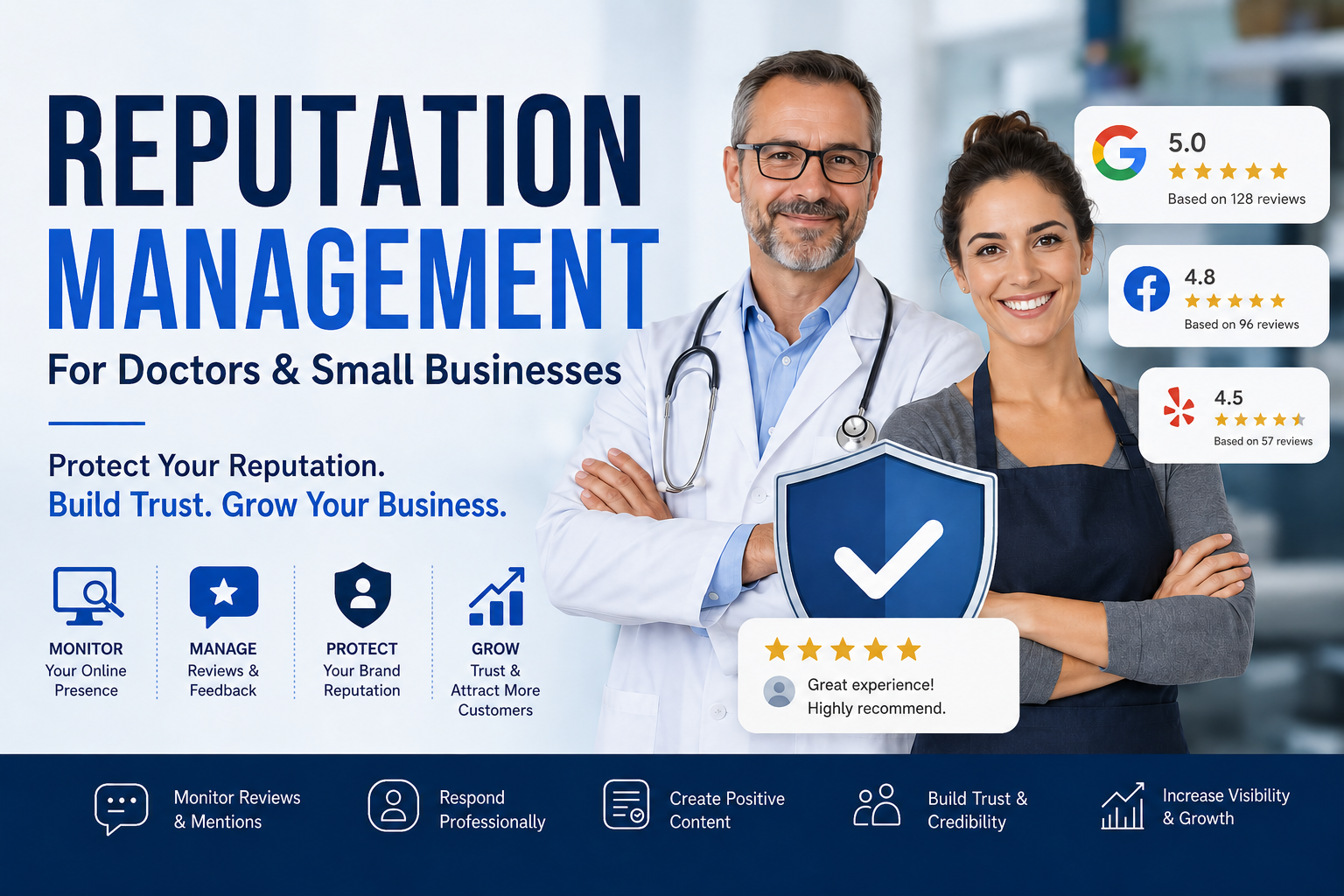
Reputation Management
What Is Reputation Management?
Reputation management is the ongoing process of monitoring, protecting, and improving how your business or practice is perceived online and offline.
This includes:
Managing online reviews
Monitoring search engine results
Responding to customer and patient feedback
Maintaining a strong social media presence
Publishing positive content
Addressing negative publicity quickly
Building trust through transparency and communication
Effective reputation management is proactive rather than reactive.
Why Doctors Face Unique Reputation Challenges
Healthcare providers operate under unique circumstances that make reputation management especially important.
Patients Research Providers Extensively
Most patients search online before selecting a physician, specialist, dentist, chiropractor, or healthcare practice. Reviews on Google, Healthgrades, Vitals, Yelp, and other platforms often influence decisions.
One Negative Review Can Have a Major Impact
Healthcare is deeply personal. Even a single negative review can affect patient trust, particularly when it appears prominently in search results.
Privacy Regulations Limit Responses
Doctors must comply with HIPAA and patient privacy regulations. This often limits how they can publicly respond to complaints, making proactive reputation-building even more important.
Trust Is the Foundation of Healthcare
Unlike many industries, healthcare relationships are built on confidence and credibility. Patients want reassurance that they are choosing a knowledgeable, compassionate, and trustworthy provider.
Why Reputation Management Is Essential for Small Businesses
For local businesses, reputation directly impacts visibility, conversions, and revenue.
Search engines increasingly use review signals to determine local rankings. Businesses with more positive reviews and higher engagement often perform better in local search results.
Customers frequently compare businesses based on:
Review ratings
Number of reviews
Owner responses
Social media presence
Website quality
Search engine visibility
A strong reputation helps businesses attract customers while reducing the impact of competitors.
The Shift From SEO to AIO
Traditional Search Engine Optimization (SEO) remains important, but businesses must also prepare for AI Optimization (AIO).
AI-powered search platforms and assistants increasingly summarize information from multiple sources when recommending businesses, doctors, and service providers.
These systems evaluate:
Online reviews
Business citations
Website authority
Customer sentiment
Media mentions
Frequently asked questions
Social proof
Educational content
Businesses with strong digital footprints are more likely to be recommended by AI-driven search experiences.
This means reputation management and content marketing now work hand in hand.
Proactive Reputation Protection Strategies
1. Claim and Optimize Every Online Profile
Start by claiming and updating profiles on:
Google Business Profile
Yelp
Facebook
Vitals
RateMDs
LinkedIn
Industry-specific directories
Ensure consistency in:
Business name
Address
Phone number
Website URL
Business hours
Consistency improves trust and local search visibility.
2. Actively Generate Positive Reviews
One of the most effective reputation strategies is simply asking satisfied customers and patients for feedback.
Create a review generation process that includes:
Follow-up emails
Text message requests
QR codes in office locations
Automated review campaigns
The goal is to build a steady flow of authentic reviews over time.
Businesses that only receive reviews occasionally are more vulnerable to negative feedback.
3. Respond to Every Review
Review responses demonstrate professionalism and customer care.
For positive reviews:
Thank customers
Personalize responses
Reinforce key strengths
For negative reviews:
Stay professional
Avoid emotional reactions
Acknowledge concerns
Offer offline resolution
For healthcare providers, always avoid discussing protected patient information.
Potential customers often judge businesses based on how they respond—not just what reviewers say.
4. Monitor Your Online Presence
Many businesses discover reputation issues too late.
Set up monitoring for:
Google Alerts
Review notifications
Social media mentions
Local directory listings
Brand name searches
Early detection allows faster response and minimizes damage.
5. Create Helpful Educational Content
One of the most overlooked reputation strategies is content marketing.
When people search your name or business, they should find valuable information that demonstrates expertise.
Doctors can publish:
Health education articles
Treatment guides
Frequently asked questions
Preventive care tips
Small businesses can publish:
Industry insights
Customer guides
Case studies
Local community content
High-quality content strengthens authority while helping push positive information higher in search results.
6. Build Authority Through Public Relations
Media mentions and third-party endorsements strengthen credibility.
Consider:
Local news interviews
Podcast appearances
Industry publications
Community involvement
Speaking engagements
These signals contribute to both SEO and AI visibility while reinforcing trust.
7. Strengthen Social Media Credibility
Consumers often visit social profiles before making decisions.
Maintain active profiles that showcase:
Customer success stories
Team introductions
Community involvement
Educational content
Business updates
Consistent activity signals legitimacy and transparency.
8. Develop a Reputation Crisis Plan
Every business should have a plan before a problem occurs.
Your plan should include:
Monitoring procedures
Internal escalation processes
Response guidelines
Public communication protocols
Legal review when necessary
Prepared businesses recover faster from negative publicity.
Common Reputation Management Mistakes
Many businesses unintentionally harm their reputations by:
Ignoring Reviews
Silence can be interpreted as indifference.
Arguing Online
Public disputes rarely improve perception.
Buying Fake Reviews
Review manipulation violates platform policies and can result in penalties.
Waiting Until a Crisis Occurs
Reactive reputation management is often more expensive and less effective.
Inconsistent Branding
Conflicting information across websites and directories creates confusion and reduces trust.
How AI Search Is Changing Reputation Management
AI search tools increasingly answer questions such as:
"Who is the best doctor near me?"
"What dentist has the best reviews?"
"Which local business is most trusted?"
"What company has the strongest reputation?"
These systems rely on publicly available signals to generate recommendations.
Businesses that consistently earn positive reviews, publish helpful content, maintain accurate profiles, and engage with customers are better positioned for visibility in AI-generated answers.
This makes reputation management a foundational part of modern digital marketing.
Final Thoughts
For doctors and small business owners, reputation is not simply a marketing asset—it is a business asset.
Every review, search result, article, social media post, and customer interaction contributes to public perception.
The most successful organizations take a proactive approach by:
Monitoring their online presence
Encouraging customer feedback
Responding professionally
Publishing educational content
Building authority through community engagement
Preparing for potential reputation challenges
In an era where both search engines and AI platforms influence consumer decisions, businesses that actively manage their reputations will be better positioned to attract new customers, earn trust, and sustain long-term growth.
Your reputation is being built every day—whether you manage it or not. The smartest strategy is to take control of the narrative before someone else does.
If you are interested in improving your reputation management, schedule your obligation-free consultation with us today!